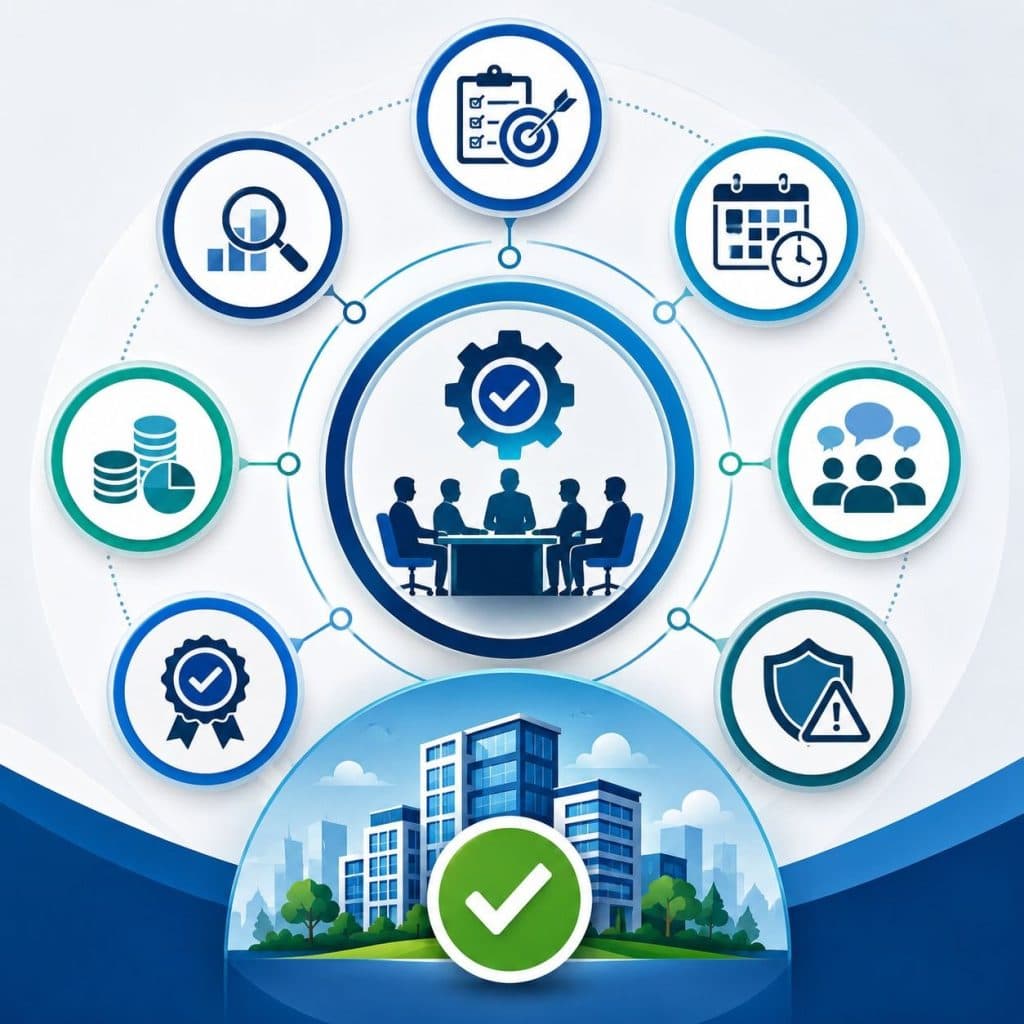
Delivering a successful construction project requires more than a good design, quality materials, and skilled professionals. It requires a structured approach that coordinates every activity from planning to completion. Project Management Success ensures that projects are delivered efficiently by controlling time, cost, scope, quality, resources, and stakeholder expectations. Therefore, effective project management has become essential for developers, investors, organizations, and construction professionals who want predictable and successful project outcomes.
In today’s competitive construction industry, projects are becoming increasingly complex. As a result, poor planning, ineffective communication, budget challenges, and uncontrolled changes can negatively affect project delivery. However, with professional project management practices, these challenges can be identified early and managed effectively. Moreover, a well-organized project management process improves collaboration between architects, engineers, contractors, consultants, and clients.
At The Building Practice Ltd, we understand that successful project delivery depends on professional coordination and strategic execution. Our Architects and Engineers are PMP-certified, enabling us to manage projects with internationally recognized project management principles. Consequently, we help clients deliver projects on time, within budget, and according to the agreed scope while maintaining high-quality standards.
What Is Project Management Success and Why Does It Matter?
Project Management Success refers to the ability to achieve project objectives while balancing critical factors such as time, cost, scope, quality, resources, and stakeholder satisfaction. It involves applying professional knowledge, processes, tools, and techniques to guide a project from its initial concept through final completion.
Unlike simple project supervision, professional project management provides a complete framework for planning, executing, monitoring, and controlling project activities. Therefore, it ensures that every decision contributes toward achieving the desired project goals.
For construction and development projects, effective project management involves coordinating several important areas, including:
- Project planning and scheduling.
- Cost estimation and budget management.
- Construction coordination.
- Risk identification and mitigation.
- Quality control and assurance.
- Procurement management.
- Contract administration.
- Stakeholder communication.
Furthermore, project management creates accountability by clearly defining responsibilities and ensuring that every team member understands their role throughout the project lifecycle.
Understanding Successful Project Delivery Through Effective Management
A project manager plays a critical role in transforming project objectives into achievable results. Rather than focusing on only one aspect of a project, the project manager oversees the relationship between people, processes, resources, and deadlines.
A professional project manager is responsible for:
- Developing project plans.
- Establishing realistic timelines.
- Coordinating project teams.
- Monitoring project progress.
- Managing project risks.
- Controlling costs.
- Resolving conflicts.
- Ensuring compliance with project requirements.
As a result, project managers act as the central link between clients, consultants, contractors, and other stakeholders. Consequently, they help maintain alignment throughout the project journey.
The Importance of Structured Project Management
Without a structured management approach, projects often experience avoidable problems. For example, unclear objectives can lead to scope changes, while poor communication can create delays and misunderstandings.
However, a structured project management system provides:
- Clear project direction.
- Better resource allocation.
- Improved decision-making.
- Stronger risk control.
- Greater cost efficiency.
- Higher quality outcomes.
Therefore, organizations that prioritize professional project management are better positioned to complete projects successfully.
Why Project Management Success Matters For Construction Projects In Nigeria
Construction projects involve multiple professionals, complex processes, strict regulations, and significant financial investments. Therefore, effective coordination is essential to prevent delays, cost increases, and quality issues.
A successful project requires continuous monitoring from the initial planning stage through completion. Moreover, every decision made during the project lifecycle can influence the final outcome.
Ensuring Projects Are Delivered on Time
Time management is one of the most important factors in construction project delivery. Delays can increase expenses, affect business operations, and reduce client confidence.
Professional project management improves schedule performance through:
- Detailed project timelines.
- Milestone tracking.
- Progress monitoring.
- Resource planning.
- Early identification of delays.
Furthermore, project managers can implement corrective actions quickly when challenges arise. Consequently, projects remain on track and are more likely to meet their completion deadlines.
Maintaining Control Over Project Costs
Budget management is another critical element of successful project delivery. Although unexpected issues may occur, effective planning and monitoring help minimize financial risks.
Project management supports cost control through:
- Accurate cost estimation.
- Budget forecasting.
- Expense tracking.
- Procurement planning.
- Financial reporting.
As a result, clients gain better visibility into project expenses and can make informed decisions throughout construction.
Managing Project Scope Effectively
Every project begins with defined objectives and deliverables. However, uncontrolled changes can affect timelines, budgets, and overall project performance.
Scope management helps prevent these challenges by:
- Clearly defining project requirements.
- Documenting deliverables.
- Evaluating change requests.
- Controlling additional work.
- Maintaining alignment with client expectations.
Therefore, professional project management ensures that projects remain focused on their original goals while allowing necessary adjustments when required.
Improving Communication Among Project Stakeholders
Construction projects involve many stakeholders, including:
- Architects.
- Engineers.
- Contractors.
- Suppliers.
- Consultants.
- Regulatory authorities.
- Clients.
Because multiple parties are involved, communication must remain clear and consistent. Otherwise, misunderstandings can lead to delays, errors, and unnecessary costs.
Professional project management improves communication through:
- Regular progress meetings.
- Detailed project reports.
- Clear documentation.
- Defined communication channels.
- Transparent decision-making.
Moreover, effective communication strengthens collaboration and creates a more productive working environment.
The Project Management Lifecycle for Successful Delivery In Nigeria
Every project follows a series of stages that guide it from concept to completion. Although project requirements may vary, the project lifecycle provides a consistent framework for managing activities effectively.
Project Initiation
The initiation phase establishes the foundation of the project. During this stage, teams determine whether the project is achievable and define its primary objectives.
Key activities include:
- Identifying project goals.
- Conducting feasibility studies.
- Understanding client requirements.
- Identifying stakeholders.
- Preparing initial project documentation.
Because this stage establishes project direction, careful planning during initiation reduces future challenges.
Project Planning
Planning transforms ideas into actionable strategies. Therefore, this phase requires detailed preparation before construction or implementation begins.
Important planning activities include:
- Developing project schedules.
- Preparing budgets.
- Allocating resources.
- Identifying risks.
- Establishing quality requirements.
- Creating communication plans.
Furthermore, effective planning allows teams to anticipate potential obstacles and prepare suitable solutions.
Project Execution
Execution is where project plans become reality. During this phase, teams begin implementing approved designs, schedules, and strategies.
Project execution involves:
- Managing construction activities.
- Coordinating contractors.
- Monitoring workmanship.
- Managing resources.
- Maintaining quality standards.
Consequently, strong leadership during execution helps ensure that project objectives remain achievable.
Project Monitoring and Control
Although execution involves active construction or implementation, continuous monitoring remains necessary.
This phase focuses on:
- Tracking project progress.
- Reviewing costs.
- Managing changes.
- Assessing risks.
- Measuring performance.
Therefore, project managers can identify issues early and make adjustments before they affect final delivery.
Project Closure
The final stage confirms that all project requirements have been completed.
Project closure includes:
- Final inspections.
- Client approval.
- Documentation completion.
- Handover processes.
- Performance reviews.
Additionally, lessons learned during closure help improve future project delivery.
READ MORE:
Top 10 Construction Project Management Companies in Nigeria for 2025
Hospital Construction Project Management in Nigeria: How to Stay on Time and Budget
The Core Components of Project Management Success
Successful project delivery depends on several interconnected management practices. Although every project has unique requirements, these core components provide the structure needed to achieve consistent results. Furthermore, they help project teams maintain control over schedules, budgets, quality standards, and stakeholder expectations.
Scope Management
Scope management defines the exact work required to complete a project successfully. Without clear scope control, projects may experience unnecessary changes, increased costs, and delayed completion.
Effective scope management involves:
- Defining project requirements.
- Establishing clear deliverables.
- Creating a Work Breakdown Structure (WBS).
- Managing change requests.
- Preventing scope creep.
Moreover, proper scope management ensures that all stakeholders have a shared understanding of project expectations. Consequently, teams can focus their efforts on achieving the intended project outcomes.
Schedule and Time Management
Time remains one of the most valuable resources in any construction project. Therefore, effective scheduling is essential for maintaining project momentum and achieving deadlines.
Professional schedule management includes:
- Developing realistic project timelines.
- Identifying important milestones.
- Monitoring progress regularly.
- Managing dependencies between activities.
- Addressing delays promptly.
Additionally, project managers use scheduling techniques such as Gantt charts and critical path analysis to improve visibility and control. As a result, teams can complete activities in the correct sequence and avoid unnecessary interruptions.
Cost and Budget Management
Financial control plays a major role in determining whether a project achieves its objectives. However, without proper cost management, projects can quickly exceed approved budgets.
Cost management includes:
- Preparing accurate estimates.
- Developing project budgets.
- Monitoring expenses.
- Reviewing cost performance.
- Managing financial risks.
Furthermore, continuous budget monitoring allows project teams to identify potential overruns before they become major issues. Consequently, clients benefit from improved financial transparency and better investment protection.
Quality Management
Quality is not achieved only at the end of a project. Instead, it must be managed throughout every stage of design, procurement, and construction.
Quality management focuses on:
- Establishing quality standards.
- Conducting inspections.
- Monitoring workmanship.
- Ensuring regulatory compliance.
- Reducing defects and rework.
Therefore, effective quality management improves project durability, safety, and client satisfaction.
Risk Management
Every project involves uncertainty. Nevertheless, professional risk management helps organizations prepare for potential challenges before they negatively affect delivery.
Risk management involves:
- Identifying possible threats.
- Assessing risk impact.
- Developing mitigation strategies.
- Monitoring changing conditions.
- Implementing corrective actions.
Moreover, proactive risk management allows teams to respond quickly when unexpected situations occur. As a result, projects become more resilient and adaptable.
Resource Management
Projects depend on people, equipment, materials, and technology. Therefore, efficient resource management ensures that everything required for project completion is available at the right time.
Effective resource management includes:
- Assigning skilled professionals.
- Planning workforce requirements.
- Managing equipment usage.
- Coordinating material availability.
- Improving productivity.
Consequently, resources are used efficiently while project delays and unnecessary expenses are reduced.
Procurement and Contract Management
Construction projects often involve multiple suppliers, contractors, and service providers. Because of this, procurement management is essential for maintaining quality, cost control, and timely delivery.
Procurement activities include:
- Selecting reliable suppliers.
- Evaluating contractors.
- Managing contracts.
- Tracking supplier performance.
- Coordinating material delivery.
Furthermore, effective contract administration helps prevent disputes while ensuring that all parties understand their responsibilities.
Stakeholder Management
Successful projects require cooperation between all involved parties. Therefore, stakeholder management is essential for maintaining strong relationships throughout the project lifecycle.
This process includes:
- Identifying stakeholder expectations.
- Communicating project updates.
- Managing concerns.
- Resolving conflicts.
- Building trust.
As a result, stakeholders remain engaged and supportive throughout project execution.
The Benefits of Project Management Success
Professional project management creates measurable benefits for developers, investors, organizations, and construction teams. Rather than reacting to problems after they occur, effective management helps teams anticipate challenges and develop solutions early.
Moreover, structured project management improves efficiency, accountability, and confidence among stakeholders.
Better Project Planning and Organization
Strong planning creates a clear roadmap for project execution. Consequently, teams understand their responsibilities, timelines, and expected outcomes.
Effective planning helps organizations:
- Define project objectives.
- Allocate resources efficiently.
- Establish realistic schedules.
- Identify potential challenges.
- Prepare mitigation strategies.
Therefore, projects begin with greater clarity and a stronger foundation for success.
Improved Cost Efficiency
Financial mistakes can significantly affect project outcomes. However, professional project management helps control costs through accurate forecasting, monitoring, and decision-making.
The benefits include:
- Reduced unnecessary expenses.
- Better budget visibility.
- Improved procurement decisions.
- Early identification of financial risks.
As a result, clients can maximize their investment while maintaining control over project expenditure.
Reduced Project Risks
Risks are unavoidable; however, their impact can be controlled through proper management. Effective project managers continuously evaluate potential issues and develop practical solutions.
Risk reduction improves:
- Project stability.
- Decision-making.
- Schedule performance.
- Financial protection.
- Stakeholder confidence.
Furthermore, proactive risk management allows teams to handle challenges without significantly disrupting project progress.
Enhanced Collaboration and Communication
Because construction projects involve multiple disciplines, effective collaboration is essential.
Professional project management encourages:
- Better coordination between teams.
- Faster information sharing.
- Clear responsibilities.
- Improved problem-solving.
Consequently, architects, engineers, contractors, and clients can work together more effectively.
Higher Quality Project Outcomes
Quality remains a key measure of project success. Therefore, professional project management ensures that quality requirements are considered throughout the project lifecycle.
This approach supports:
- Compliance with standards.
- Improved construction quality.
- Reduced defects.
- Better long-term performance.
As a result, clients receive projects that provide lasting value.
Common Challenges That Affect Project Delivery
Although professional management improves project outcomes, construction projects can still experience challenges. However, identifying these challenges early allows teams to develop effective solutions.
Poor Initial Planning
Inadequate planning can create problems that affect the entire project lifecycle.
Common consequences include:
- Unrealistic deadlines.
- Budget inaccuracies.
- Resource shortages.
- Poor coordination.
Therefore, investing sufficient time in project planning is essential before execution begins.
Scope Changes and Scope Creep
Changes are sometimes necessary during project development. Nevertheless, uncontrolled changes can negatively affect cost, schedule, and quality.
Scope creep may result in:
- Additional expenses.
- Extended timelines.
- Confusion among teams.
- Reduced productivity.
Consequently, every change should be carefully reviewed and properly documented.
Budget Overruns
Unexpected expenses can place pressure on project finances. However, effective cost management helps reduce the likelihood of major budget problems.
Common causes of overruns include:
- Poor estimates.
- Material price changes.
- Design modifications.
- Procurement challenges.
Furthermore, regular financial reviews help project teams respond quickly to cost-related issues.
Communication Failures
Poor communication can create misunderstandings between project stakeholders.
Possible effects include:
- Delayed decisions.
- Incorrect execution.
- Conflicting expectations.
- Reduced teamwork.
Therefore, maintaining transparent communication channels is essential throughout the project.
Resource Limitations
Projects may face shortages in skilled labour, materials, equipment, or funding. Nevertheless, proper resource planning helps minimize these challenges.
Effective resource management ensures:
- Availability of required materials.
- Efficient workforce allocation.
- Better equipment utilization.
- Improved productivity.
Deliver Your Project with Professional Expertise
Successful project delivery requires experienced professionals who understand design, engineering, construction processes, and project coordination.
At The Building Practice Ltd, our Architects and Engineers are PMP-certified and equipped with the expertise required to manage complex projects effectively. We combine technical knowledge with professional project management practices to ensure projects are delivered on time, within budget, and according to the agreed scope.
Through structured planning, effective coordination, and proactive risk management, we help clients achieve reliable project outcomes while protecting their investments.
Best Practices for Project Management Success
Achieving consistent project outcomes requires more than simply following a plan. Instead, organizations must apply proven strategies that improve efficiency, strengthen collaboration, and reduce uncertainty. Therefore, adopting effective project management practices helps teams deliver projects that meet client expectations while maintaining control over time, cost, and quality.
Establish Clear Project Objectives
Every successful project begins with clearly defined objectives. Without a clear direction, teams may struggle to prioritize activities or measure progress effectively.
Therefore, project objectives should:
- Align with client expectations.
- Define measurable outcomes.
- Establish project priorities.
- Identify required deliverables.
- Clarify success criteria.
Moreover, clearly communicated objectives ensure that architects, engineers, contractors, and clients work toward the same goals.
Create a Detailed Project Plan
A comprehensive project plan provides a roadmap for successful execution. Although unexpected challenges may occur, detailed planning prepares teams to respond effectively.
A strong project plan should include:
- Project scope.
- Budget estimates.
- Construction schedule.
- Resource requirements.
- Risk management strategies.
- Communication procedures.
- Quality expectations.
Consequently, project teams can make informed decisions while maintaining better control throughout the project lifecycle.
Monitor Progress Regularly
Continuous monitoring helps project managers understand whether activities are progressing according to plan. Furthermore, regular reviews allow teams to identify challenges before they affect final delivery.
Progress monitoring includes:
- Reviewing project milestones.
- Tracking costs.
- Evaluating quality performance.
- Assessing risks.
- Measuring resource utilization.
As a result, project managers can implement corrective actions quickly and maintain project momentum.
Maintain Strong Stakeholder Communication
Effective communication remains one of the most important factors in successful project delivery. Since construction projects involve several stakeholders, consistent information sharing prevents misunderstandings.
Best communication practices include:
- Regular progress meetings.
- Detailed project reports.
- Clear documentation.
- Defined communication channels.
- Transparent decision-making.
Additionally, strong communication improves trust and encourages collaboration among all project participants.
Use Technology to Improve Project Control
Modern technology has transformed how construction projects are planned and managed. Therefore, using digital tools can improve efficiency, accuracy, and visibility.
Common project management technologies include:
- Scheduling software.
- Building Information Modelling (BIM).
- Digital collaboration platforms.
- Cost management systems.
- Project reporting dashboards.
Consequently, project teams can access accurate information, improve coordination, and make faster decisions.
Project Management Tools That Improve Project Delivery
Technology supports effective project management by improving planning, communication, and performance monitoring. However, tools should complement professional expertise rather than replace experienced decision-making.
Scheduling and Planning Software
Scheduling tools help project managers organize activities and monitor progress effectively.
These tools support:
- Timeline development.
- Task assignment.
- Milestone tracking.
- Resource planning.
- Progress reporting.
For example, platforms such as Microsoft Project and Primavera P6 are widely used for managing complex construction schedules.
Building Information Modelling (BIM)
BIM technology improves collaboration by creating digital representations of buildings before construction begins.
It supports:
- Design coordination.
- Clash detection.
- Construction planning.
- Cost estimation.
- Project visualization.
Therefore, BIM helps reduce errors while improving communication between architects, engineers, and contractors.
Collaboration Platforms
Digital collaboration platforms allow teams to share information and coordinate activities more efficiently.
They enable:
- Document sharing.
- Task management.
- Communication tracking.
- Real-time updates.
- Improved accountability.
As a result, project teams remain connected throughout the entire delivery process.
Project Reporting Dashboards
Dashboards provide valuable insights into project performance by displaying important information in an easy-to-understand format.
They help monitor:
- Budget performance.
- Schedule progress.
- Risk status.
- Quality indicators.
- Resource usage.
Consequently, decision-makers can respond quickly to emerging issues.
Professional Project Management vs Traditional Project Coordination
Understanding the difference between structured project management and basic coordination highlights the value of professional expertise.
| Traditional Project Coordination | Professional Project Management |
|---|---|
| Focuses mainly on daily activities | Uses structured planning and management processes |
| Often reacts to problems after they occur | Identifies and manages risks proactively |
| Limited performance tracking | Uses measurable project indicators |
| Communication may be inconsistent | Maintains clear stakeholder communication |
| Higher possibility of delays and cost increases | Improves schedule and budget control |
| Limited documentation processes | Maintains detailed project records |
| Less focus on continuous improvement | Applies lessons learned for future success |
Therefore, professional project management provides a stronger framework for delivering complex construction and development projects successfully.
Why Choose The Building Practice Ltd for Project Management Success
Selecting an experienced project management partner can significantly influence the outcome of a construction project. Although technical design and construction skills are important, effective coordination determines whether a project achieves its objectives efficiently.
At The Building Practice Ltd, we combine architectural expertise, engineering knowledge, and professional project management practices to deliver reliable project outcomes.
Our Architects and Engineers are PMP-certified, which means they apply internationally recognized project management principles when managing projects. Consequently, clients benefit from structured planning, improved coordination, effective risk management, and better project control.
Phone: +234 904 9721 840
Email: info@buildingpractice.biz
Address: Plot 6, Remi Olowude Street, Lekki Phase 1, Lagos
Website: The Building Practice Ltd
Stay connected with The Building Practice
Follow @thebuildingpractice on Instagram for professional insight on how to plan and execute a tall building construction project
We help you turn complex high-rise ideas into safe, efficient, and profitable developments.
Frequently Asked Question About Project Management Success In Nigeria
1. What is Project Management Success?
Project Management Success is the ability to achieve project goals by effectively managing time, cost, scope, quality, resources, and stakeholder expectations. It involves applying structured processes to ensure projects are completed successfully and deliver the expected value.
2. Why is Project Management Success important for construction projects?
Project Management Success is important because construction projects involve multiple teams, complex activities, and significant investments. Effective project management helps control costs, reduce risks, improve communication, maintain quality, and ensure timely completion.
3. What are the main stages of project management?
The main stages include project initiation, planning, execution, monitoring and control, and project closure. Together, these phases provide a structured framework for managing projects from concept to completion.
4. How does project management help prevent construction delays?
Project management reduces delays through detailed scheduling, resource planning, progress monitoring, risk identification, and timely corrective actions. Consequently, project teams can address challenges before they affect completion timelines.
5. Why is PMP certification valuable in project management?
PMP certification demonstrates that professionals have the knowledge and skills required to apply internationally recognized project management standards. Therefore, PMP-certified professionals can manage complex projects more effectively.
6. Which tools are used for effective project management?
Common tools include Microsoft Project, Primavera P6, Building Information Modelling (BIM), collaboration platforms, cost management software, and project reporting dashboards.
7. Why should I choose The Building Practice Ltd for project management?
The Building Practice Ltd combines architectural expertise, engineering experience, and PMP-certified professionals to manage projects effectively. Our team helps clients achieve successful project delivery by ensuring projects are completed on time, within budget, and according to the agreed scope.