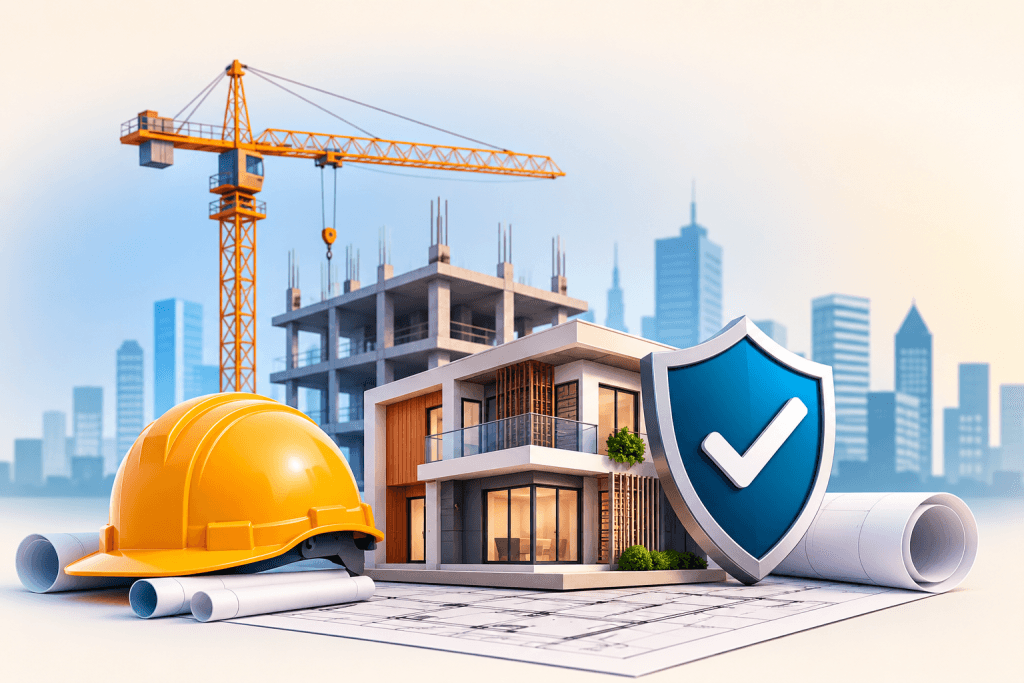
Every safe, durable, and legally compliant building begins with adherence to Building Codes. Whether you are constructing a residential home, commercial office, healthcare facility, educational institution, or industrial complex, building codes establish the minimum standards required to protect lives, property, and the environment. Moreover, they provide architects, engineers, developers, contractors, and regulatory authorities with a common framework for designing and constructing buildings that perform safely throughout their lifespan. Therefore, understanding the importance of building codes is essential for anyone involved in the construction industry. At The Building Practice Ltd, we integrate applicable national and international building codes into every project because every building we design is intended to be safe, functional, sustainable, and compliant with relevant regulations.
What Are Building Codes?
Building codes are legally recognised regulations that establish the minimum requirements for the planning, design, construction, alteration, maintenance, and occupancy of buildings. Their primary purpose is to safeguard public health, safety, and welfare while ensuring that structures remain stable, accessible, and fit for their intended use.
Although architects strive to create visually appealing and innovative buildings, aesthetics alone are never enough. Instead, every successful project must also satisfy technical, structural, environmental, and safety requirements. Consequently, building codes provide a consistent framework that guides architects, structural engineers, mechanical engineers, electrical engineers, builders, and government authorities throughout the construction process.
Furthermore, building codes evolve as construction technologies, engineering practices, and environmental considerations improve. As a result, modern regulations address not only structural safety but also sustainability, accessibility, fire protection, sanitation, and energy efficiency.
Some of the key areas covered by building codes include:
- Structural stability
- Fire safety
- Plumbing systems
- Electrical installations
- Mechanical services
- Accessibility
- Ventilation
- Energy efficiency
- Environmental protection
- Building maintenance
Therefore, complying with building codes is not simply about obtaining government approval. More importantly, it is about delivering buildings that protect occupants, preserve investments, and contribute to safer communities.
Why Building Codes Are Important In Nigeria
Building regulations benefit everyone involved in the built environment. While property owners gain safer and more valuable assets, occupants enjoy healthier and more secure spaces. Likewise, architects, engineers, contractors, and regulatory authorities rely on these standards to maintain consistent quality across projects.
Below are some of the most significant reasons why building codes are indispensable.
Building Codes Protect Lives
Above all, the primary objective of every building code is to protect human life. Consequently, regulations require buildings to withstand expected structural loads while providing safe evacuation routes during emergencies such as fires, storms, or other hazards.
For example, building codes establish minimum requirements for:
- Structural design
- Fire-resistant construction
- Emergency exits
- Smoke control
- Occupant evacuation
- Emergency lighting
- Accessible escape routes
As a result, buildings become significantly safer for everyone who uses them.
Building Codes Improve Structural Safety
Every structure must safely support its own weight as well as the additional loads created by occupants, furniture, equipment, wind, and environmental conditions. Therefore, engineers rely on recognised building standards when calculating foundations, columns, beams, slabs, walls, and roofs.
Moreover, these regulations help minimise structural defects that may lead to cracking, excessive movement, or even collapse. Consequently, buildings designed according to recognised standards generally perform better throughout their service life.
Building Codes Enhance Fire Protection
Fire remains one of the greatest threats to buildings worldwide. Accordingly, modern construction regulations contain comprehensive fire safety requirements that reduce risks before emergencies occur.
These provisions typically include:
- Fire-resistant materials
- Smoke detection systems
- Fire alarm systems
- Emergency escape routes
- Fire compartmentation
- Fire suppression systems
- Emergency lighting
Furthermore, these requirements improve emergency response while giving occupants more time to evacuate safely.
Building Codes Promote Public Health
Healthy buildings depend on much more than strong structural systems. Proper sanitation, clean water supply, ventilation, and waste disposal are equally important.
For this reason, building regulations establish standards for:
- Potable water supply
- Drainage systems
- Waste disposal
- Indoor air quality
- Ventilation
- Moisture control
- Hygiene facilities
Consequently, occupants benefit from healthier indoor environments that reduce the likelihood of disease transmission and poor living conditions.
Building Codes Protect Investments
Constructing a building represents a significant financial commitment. However, projects that ignore recognised standards often experience expensive repairs, legal disputes, regulatory penalties, and reduced property values.
Conversely, buildings designed in accordance with recognised codes generally require fewer corrective works while maintaining stronger long-term market value. In addition, lenders, insurers, and investors are often more confident in developments that demonstrate compliance with accepted construction standards.
Building Codes Support Sustainable Development
Sustainability has become a major priority within the global construction industry. Therefore, many modern building regulations encourage responsible environmental practices alongside traditional safety requirements.
For example, today’s construction standards promote:
- Energy-efficient building envelopes
- Water conservation
- Sustainable construction materials
- Renewable energy integration
- Climate resilience
- Reduced environmental impact
- Improved indoor environmental quality
As a result, compliant buildings frequently achieve lower operating costs while supporting long-term environmental goals.
Who Must Comply with Building Codes In Nigeria?
Many people assume that building codes apply only to architects or contractors. However, compliance is a shared responsibility involving everyone participating in the design, approval, construction, and management of a building.
Typically, the following stakeholders are expected to comply with applicable regulations:
- Architects
- Structural engineers
- Mechanical engineers
- Electrical engineers
- Builders
- Quantity surveyors
- Project managers
- Property developers
- Contractors
- Building owners
- Facility managers
Because each professional contributes to different aspects of a project, collaboration is essential to ensure that every building meets the required standards before construction begins and throughout its lifecycle.
The Evolution of Building Regulations in Nigeria
Nigeria’s construction industry has expanded significantly over the past few decades. Meanwhile, rapid urbanisation, population growth, and increased infrastructure development have made consistent building standards more important than ever.
Historically, inconsistent construction practices and varying regulatory requirements contributed to concerns about building quality and public safety. Consequently, the Federal Government developed the National Building Code (NBC) to establish a unified framework for planning, designing, constructing, and maintaining buildings across the country.
The National Building Code provides guidance for architects, engineers, builders, developers, and regulatory authorities while promoting safer construction practices nationwide.
Although the National Building Code was first published in 2006, discussions and review efforts have continued over the years to strengthen its implementation and address emerging issues such as sustainability, accessibility, modern construction technologies, and resilience. Therefore, construction professionals are encouraged to remain informed about current regulatory requirements issued by the appropriate authorities.
Design with Confidence Choose The Building Practice Ltd
Every successful building starts with expert planning and strict compliance with recognised building codes. At The Building Practice Ltd, every project is designed in accordance with one or more applicable national and international standards, including the Nigeria National Building Code (NBC), International Building Code (IBC), International Fire Code (IFC), International Plumbing Code (IPC), British Standards Institution (BSI), and National Fire Protection Association (NFPA) standards, where applicable. Whether you’re planning a residential, commercial, institutional, or mixed-use development in Nigeria, our experienced architects deliver safe, functional, and regulation-compliant designs tailored to your project’s needs.
Phone: +234 904 9721 840
Email: info@buildingpractice.biz
Address: Plot 6, Remi Olowude Street, Lekki Phase 1, Lagos
Website: The Building Practice Ltd
Nigeria National Building Code (NBC) 2006
The Nigeria National Building Code (NBC) 2006 remains one of the most important regulatory documents within the Nigerian construction industry. It was developed to establish uniform technical and administrative requirements for the planning, design, construction, occupancy, maintenance, and demolition of buildings.
Before its introduction, building regulations varied considerably across different states and local authorities. Consequently, inconsistent standards sometimes created confusion for construction professionals and made enforcement more difficult.
The National Building Code addressed these challenges by providing a comprehensive framework that promotes consistency and accountability throughout the construction process.
Its major objectives include:
- Protecting public health and safety
- Promoting structural reliability
- Standardising construction practices
- Improving building quality
- Supporting sustainable urban development
- Clarifying professional responsibilities
- Encouraging proper maintenance of buildings
- Enhancing public confidence in the built environment
Furthermore, the code encourages collaboration among architects, engineers, builders, developers, contractors, and regulatory authorities. As a result, projects can be planned and executed more efficiently while reducing avoidable construction risks.
Importantly, the National Building Code is most effective when combined with proper enforcement, qualified professionals, quality materials, and responsible construction practices. Therefore, compliance should always begin at the design stage rather than after construction has started.
Nigeria National Building Code (NBC) 2018 Review
As Nigeria’s construction industry continued to expand, the need to strengthen building regulations became increasingly apparent. Consequently, the Nigeria National Building Code (NBC) underwent a comprehensive review in 2018 to address emerging challenges within the built environment. While the original National Building Code was approved in 2006, the 2018 review sought to improve technical requirements, enhance professional accountability, and promote safer construction practices across the country.
Furthermore, the review reflected changes in modern engineering, architectural design, construction technologies, environmental sustainability, and public safety. Therefore, it reinforced the importance of designing and constructing buildings that are resilient, functional, and capable of meeting contemporary development needs.
Key Objectives of the 2018 NBC Review
The 2018 review focused on improving the overall effectiveness of the National Building Code by:
- Strengthening structural safety requirements
- Improving fire safety provisions
- Enhancing accessibility for persons with disabilities
- Promoting sustainable building practices
- Encouraging environmental protection
- Improving quality assurance during construction
- Clarifying the responsibilities of developers and licensed professionals
- Supporting better regulatory oversight and enforcement
As a result, the reviewed framework provides more comprehensive guidance for architects, engineers, builders, developers, and regulatory authorities involved in construction projects.
Structure of the National Building Code
The reviewed National Building Code is broadly organised into four major parts, each addressing a critical aspect of the construction process.
1. Administration
This section outlines the administrative framework for implementing the code. It defines the responsibilities of government agencies, developers, consultants, contractors, and registered construction professionals. In addition, it establishes procedures for approvals, inspections, compliance, and enforcement.
2. Technical Provisions
The technical section contains minimum standards for the design and construction of buildings. It covers structural engineering, architectural requirements, electrical and mechanical installations, plumbing systems, fire safety measures, accessibility, ventilation, environmental sustainability, and other essential building services.
3. Building Control Works
This section focuses on construction supervision and regulatory compliance. It establishes requirements for building permits, inspections, quality management plans, construction monitoring, and documentation to ensure that approved designs are implemented correctly throughout the construction process.
4. Referenced Standards
The National Building Code also identifies recognised technical standards and specifications that support safe construction practices. These referenced standards provide guidance on construction materials, testing methods, engineering practices, and safety requirements that professionals should follow when designing and constructing buildings.
Implementation and Enforcement
Although the National Building Code provides a national framework for construction, its implementation depends largely on individual states adopting and enforcing its provisions through their respective laws and regulatory agencies. Consequently, building approvals, inspections, and compliance are generally managed by state-level building control authorities.
For example, in Lagos State, agencies such as the Lagos State Building Control Agency (LASBCA) oversee building control activities, while other states operate through their own planning and regulatory institutions.
Furthermore, successful compliance typically requires professionally prepared architectural and engineering drawings, structural calculations, safety documentation, Bills of Quantities, and other statutory submissions prepared by registered professionals.
Building Approval and Enforcement of Building Codes in Nigeria
Having well-developed regulations is only one part of achieving safe construction. Equally important is ensuring that these standards are properly implemented and enforced. Therefore, building approval processes and regulatory inspections play a critical role in maintaining construction quality across Nigeria.
Before construction begins, developers are generally required to obtain the necessary planning and building approvals from the relevant state or local authorities. During this process, submitted architectural and engineering drawings are reviewed to ensure they comply with applicable regulations, planning requirements, and safety standards.
Furthermore, inspections are often carried out at different stages of construction to verify that the approved designs are being followed. If significant deviations are identified, authorities may require corrective actions before the project can proceed.
Consequently, obtaining approvals before construction and complying with inspection requirements help reduce project delays, improve public safety, and minimise the risk of future legal disputes.
Who Enforces Building Codes in Nigeria?
The responsibility for enforcing building regulations is shared among several government agencies and professional bodies. Although enforcement procedures vary across states, regulatory authorities generally oversee planning approvals, inspections, and occupancy requirements.
In addition, registered professionals including architects, engineers, builders, and quantity surveyors have an ethical and professional responsibility to ensure that projects comply with applicable regulations and industry standards.
Therefore, effective collaboration between government authorities and qualified construction professionals is essential for improving safety within Nigeria’s built environment.
International Building Codes Used Around the World
While the Nigeria National Building Code provides the primary framework for construction within the country, many projects also reference internationally recognised standards. This is especially true for commercial developments, multinational organisations, healthcare facilities, educational institutions, industrial projects, and high-value investments.
Moreover, international standards often complement local regulations by introducing globally accepted engineering principles, quality benchmarks, and safety requirements.
The most widely recognised international building standards include the International Building Code (IBC), International Fire Code (IFC), International Plumbing Code (IPC), British Standards (BSI), and National Fire Protection Association (NFPA) standards.
International Building Code (IBC)
The International Building Code (IBC) is one of the world’s most comprehensive building regulations. Developed by the International Code Council (ICC), it provides minimum requirements for designing safe, accessible, durable, and resilient buildings.
Because the IBC covers nearly every aspect of building design, it has become a trusted reference for architects, engineers, developers, and regulatory authorities in many countries.
The International Building Code addresses areas such as:
- Structural design
- Occupancy classifications
- Fire-resistant construction
- Building height and area limitations
- Accessibility requirements
- Means of egress
- Construction materials
- Seismic and wind design considerations
Consequently, projects designed in accordance with IBC principles often demonstrate greater safety, consistency, and long-term performance.
Why the International Building Code Matters
Large-scale developments frequently involve multidisciplinary teams working across different regions. Therefore, a recognised international standard helps maintain consistency throughout the design and construction process.
Furthermore, investors and multinational organisations often value projects that incorporate internationally accepted safety standards because they inspire greater confidence and reduce long-term operational risks.
International Fire Code (IFC)
Fire safety is one of the most critical aspects of building design. Accordingly, the International Fire Code (IFC) establishes comprehensive requirements for preventing fires, protecting occupants, and improving emergency preparedness.
Rather than focusing only on emergency response, the IFC promotes proactive fire prevention throughout the entire lifecycle of a building.
Its provisions typically cover:
- Fire prevention strategies
- Fire alarm systems
- Fire detection equipment
- Emergency evacuation planning
- Fire department access
- Hazardous material storage
- Inspection procedures
- Fire safety management
As a result, buildings that incorporate IFC principles are generally better prepared to minimise fire-related risks while improving occupant safety.
Benefits of the International Fire Code
The IFC improves building resilience by ensuring that fire safety systems work together effectively. Moreover, it supports faster emergency response, safer evacuation procedures, and reduced property damage during fire incidents.
Therefore, many commercial, healthcare, hospitality, and industrial developments consider IFC guidance an essential part of their overall safety strategy.
International Plumbing Code (IPC)
Safe plumbing systems are fundamental to public health. Consequently, the International Plumbing Code (IPC) establishes standards that govern the design, installation, and maintenance of plumbing systems.
The IPC covers:
- Potable water distribution
- Drainage systems
- Wastewater disposal
- Plumbing fixtures
- Stormwater management
- Ventilation of plumbing systems
- Backflow prevention
- Water conservation measures
Furthermore, these standards help ensure that buildings provide reliable access to clean water while protecting occupants from contamination and unsanitary conditions.
Why the International Plumbing Code Is Important
Poor plumbing design can result in costly repairs, health hazards, unpleasant indoor conditions, and environmental damage. However, compliance with IPC requirements significantly reduces these risks.
Additionally, modern plumbing regulations encourage sustainable water management, making buildings more environmentally responsible and cost-efficient over time.
British Standards Institution (BSI)
The British Standards Institution (BSI) develops internationally recognised technical standards that influence construction, engineering, manufacturing, and infrastructure projects around the world.
Although these standards originated in the United Kingdom, they are widely respected because they promote consistency, quality assurance, and engineering excellence.
Within the construction sector, BSI standards provide guidance on:
- Structural steel design
- Concrete construction
- Building materials
- Mechanical engineering
- Electrical installations
- Construction testing
- Quality management
- Engineering best practices
Consequently, many international consultants reference British Standards when delivering projects that require exceptional quality and long-term durability.
Why British Standards Are Widely Used
Construction quality depends not only on good design but also on proper material selection and workmanship. Therefore, British Standards help professionals maintain consistency across every stage of a project.
Moreover, adherence to BSI standards can improve quality assurance, minimise construction defects, and enhance the overall performance of completed buildings.
National Fire Protection Association (NFPA)
The National Fire Protection Association (NFPA) publishes globally respected standards that focus on fire prevention, electrical safety, emergency preparedness, and life safety.
Unlike a single building code, NFPA produces numerous standards that address specific aspects of fire protection for different building types and industries.
Common NFPA standards relate to:
- Fire alarm systems
- Automatic sprinkler systems
- Fire extinguishers
- Electrical safety
- Emergency power systems
- Smoke management
- Life safety planning
- Fire prevention programmes
Accordingly, many architects and fire protection engineers integrate NFPA guidance into projects requiring advanced fire safety solutions.
Why NFPA Standards Matter
Fire protection involves much more than installing alarms or sprinklers. Instead, it requires a coordinated approach that considers building layout, occupancy, emergency access, evacuation planning, and ongoing maintenance.
Therefore, NFPA standards play an important role in protecting both people and property while supporting business continuity.
Comparison of Major Building Standards
| Standard | Primary Focus | Typical Application |
|---|---|---|
| Nigeria National Building Code (NBC) | Building regulation and construction standards | Construction projects within Nigeria |
| International Building Code (IBC) | Structural safety and overall building design | Commercial and international developments |
| International Fire Code (IFC) | Fire prevention and emergency preparedness | Buildings requiring comprehensive fire protection |
| International Plumbing Code (IPC) | Plumbing systems and sanitation | Residential, commercial, and industrial projects |
| British Standards (BSI) | Engineering quality and technical standards | International engineering and construction |
| National Fire Protection Association (NFPA) | Fire protection and life safety | Buildings requiring advanced fire safety systems |
How Building Codes Influence Architectural Design In Nigeria
Successful architecture combines creativity with technical precision. While aesthetics create visual appeal, building codes ensure that designs are safe, functional, and compliant.
Consequently, architects consider regulatory requirements from the earliest concept stage. Every design decision—from site planning to material selection is influenced by applicable standards.
These considerations include:
- Site planning and setbacks
- Occupancy classification
- Structural systems
- Fire escape routes
- Accessibility requirements
- Ventilation strategies
- Plumbing layouts
- Natural lighting
- Building services coordination
- Material specifications
Because these issues are addressed early in the design process, projects are more likely to progress smoothly through approvals and construction.
READ MORE:
Building Code Compliance in Nigeria: Ensuring Safe, Sustainable, and Legal Structures
High-Rise Building Regulations in Nigeria: Approvals, Codes, and Compliance Requirements
Top 10 Building Codes in Lagos 2024 for Construction Projects
Consequences of Ignoring Building Codes In Nigeria
Ignoring building regulations can have serious consequences for property owners, developers, contractors, and the communities that use these buildings. Although some people may view compliance as an additional expense, the long-term cost of non-compliance is often far greater. Therefore, following recognised standards from the beginning of a project is both a legal responsibility and a smart investment.
Moreover, buildings that fail to comply with applicable regulations are more likely to experience structural defects, safety concerns, regulatory penalties, and costly repairs. Consequently, investing in code-compliant design helps reduce these risks while improving the overall quality and lifespan of a building.
Increased Risk of Structural Failure
One of the most serious consequences of ignoring building regulations is structural failure. Every building must be designed to safely withstand its own weight as well as additional loads caused by occupants, furniture, equipment, wind, rainfall, and other environmental conditions.
However, if these engineering requirements are overlooked, buildings may develop cracks, excessive movement, foundation problems, or, in severe cases, structural collapse. Therefore, compliance with recognised standards is essential for protecting both lives and investments.
Higher Fire Safety Risks
Fire protection should never be treated as an optional design feature. Instead, it should be integrated into every stage of a project.
Buildings that fail to comply with fire safety requirements may have:
- Inadequate emergency exits
- Poor fire compartmentation
- Insufficient smoke detection
- Limited fire suppression systems
- Inadequate emergency lighting
As a result, occupants may face greater danger during emergencies, while property damage can increase significantly.
Legal and Regulatory Consequences
Failure to comply with applicable regulations can also create legal challenges. Depending on the jurisdiction and the severity of the violation, developers may face:
- Delays in project approvals
- Stop-work notices
- Additional inspections
- Financial penalties
- Costly redesigns
- Refusal of occupancy approval
- Legal disputes
Furthermore, these issues can damage a developer’s reputation and delay project completion.
Increased Maintenance and Repair Costs
Although cutting corners may appear to reduce initial construction costs, it often leads to expensive repairs later.
For example, poor structural detailing, inadequate drainage, substandard plumbing installations, or improperly designed fire protection systems can require significant corrective work after the building is occupied.
Consequently, property owners frequently spend far more on repairs than they would have spent on proper design and construction from the outset.
How Building Codes Affect Insurance and Property Value In Nigeria
Insurance providers evaluate several factors before offering coverage for residential, commercial, or industrial buildings. Among these factors, compliance with recognised construction standards plays an important role.
Buildings that follow applicable regulations are generally viewed as lower-risk investments because they are designed to reduce structural failures, fire hazards, and other safety concerns.
Consequently, code-compliant buildings may benefit from:
- Greater investor confidence
- Improved property value
- Better long-term durability
- Reduced operational risks
- Increased buyer confidence
- Easier financing opportunities
Moreover, well-designed buildings often retain their value more effectively because they meet recognised construction standards and are easier to maintain over time.
Building Codes and Sustainable Cities
As cities continue to expand, sustainable construction becomes increasingly important. Therefore, building regulations now play a significant role in supporting responsible urban development.
Modern construction standards encourage buildings that:
- Use energy efficiently
- Conserve water
- Improve indoor environmental quality
- Reduce environmental impact
- Enhance resilience to climate-related challenges
- Promote safer communities
Furthermore, sustainable buildings help reduce operating costs while improving occupant comfort and long-term environmental performance.
Consequently, building codes contribute not only to safer buildings but also to healthier and more resilient cities.
Why Choose The Building Practice Ltd?
Designing a successful building requires much more than creativity. It also demands technical expertise, regulatory knowledge, and a thorough understanding of how different building systems work together.
At The Building Practice Ltd, we believe that every project should combine outstanding architectural design with strict compliance, functionality, sustainability, and long-term performance.
Therefore, our team carefully considers every aspect of a project from concept development and planning to construction documentation while ensuring that applicable regulations are integrated into the design process.
Our Commitment to Code-Compliant Architecture
Every project is unique. Consequently, we evaluate each client’s requirements before determining which standards are most appropriate for the development.
Every building The Building Practice works on is designed with one or more of these recognised building codes, including:
- Nigeria National Building Code (NBC)
- International Building Code (IBC)
- International Fire Code (IFC)
- International Plumbing Code (IPC)
- British Standards Institution (BSI) Standards
- National Fire Protection Association (NFPA) Standards
As a result, our clients receive buildings that prioritise:
- Safety
- Regulatory compliance
- Structural integrity
- Sustainability
- Functionality
- Long-term value
Frequently Asked Questions About Building Codes in Nigeria
1. What are building codes?
Building codes are legally recognised regulations that establish the minimum standards for designing, constructing, altering, and maintaining buildings to protect public health, safety, and welfare.
2. Why are building codes important?
Building codes are important because they improve structural safety, fire protection, sanitation, accessibility, and sustainability while helping safeguard lives and property.
3. What is the Nigeria National Building Code (NBC)?
The Nigeria National Building Code (NBC), first published in 2006, provides a national framework for planning, designing, constructing, and maintaining buildings to promote safer and more consistent construction practices across Nigeria.
4. What is the difference between the IBC, IFC, and IPC?
The International Building Code (IBC) focuses on overall building design and structural safety, the International Fire Code (IFC) addresses fire prevention and emergency preparedness, while the International Plumbing Code (IPC) establishes standards for plumbing systems, sanitation, and water supply.
5. Are British Standards (BSI) and NFPA standards used in Nigeria?
Yes. Although Nigerian projects primarily follow local regulations, some developments also reference British Standards (BSI) and National Fire Protection Association (NFPA) standards where appropriate, particularly for specialised engineering and fire protection requirements.
6. Who should ensure compliance with building codes?
Compliance is a shared responsibility involving architects, engineers, builders, contractors, developers, building owners, and regulatory authorities throughout the design, construction, and maintenance of a building.
7. Why should I choose The Building Practice Ltd for my project?
The Building Practice Ltd integrates recognised national and international building standards into every project. Every building The Building Practice works on is designed with one or more recognised building codes, ensuring safe, functional, sustainable, and regulation-compliant architectural solutions.