
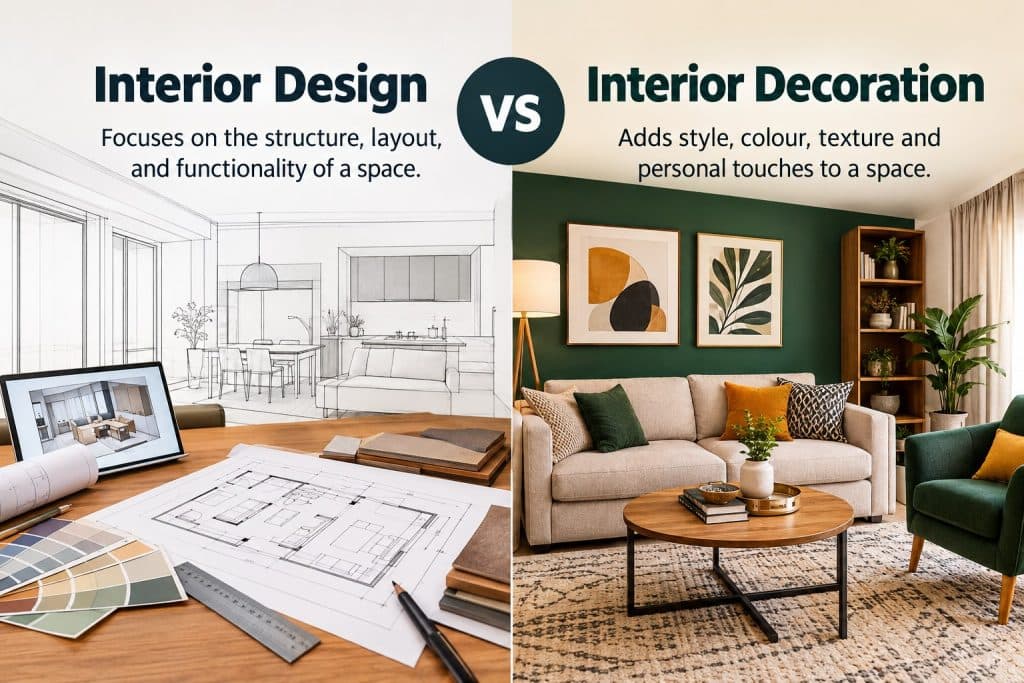
When planning a new home, renovating an office, or upgrading a commercial property, understanding Interior Design Interior Decoration can help you choose the right professional for the project. The Building Practice Ltd specializes in professional architectural and interior design services in Nigeria, helping clients develop spaces that balance functionality, aesthetics, comfort, technical requirements, and long-term value. Although interior design and interior decoration are closely related, they are not exactly the same service. Their scope, processes, deliverables, technical requirements, and project responsibilities can differ considerably. In simple terms, interior design generally addresses how an interior space works, flows, and performs, while interior decoration focuses more heavily on how the finished space looks and feels. However, there is some overlap between the two. Therefore, understanding the distinction is particularly important before starting a residential renovation, office fit-out, hospitality project, retail development, or other building project in Nigeria.
Contact The Building Practice Ltd
Phone: +234 904 9721 840
Email: info@buildingpractice.biz
Address: Plot 6, Remi Olowude Street, Lekki Phase 1, Lagos
Website: The Building Practice Ltd
Stay connected with The Building Practice Follow @thebuildingpractice on Instagram for professional insight for expert insights on top architectural design and innovation.
Interior Design vs Interior Decoration: Key Differences at a Glance
The difference becomes easier to understand when the two disciplines are considered from the perspective of project scope.
| Area | Interior Design | Interior Decoration |
|---|---|---|
| Primary focus | Function, planning and overall interior environment | Appearance, styling and visual character |
| Space planning | Major component | Usually limited |
| Furniture | Selected as part of the overall design | Selected primarily for style and comfort |
| Colours and fabrics | Integrated into the design concept | Major area of focus |
| Materials and finishes | Considered for performance and aesthetics | Selected mainly for appearance and coordination |
| Technical coordination | Often involved | Usually limited |
| Renovation | May form part of the service | Usually works within an existing layout |
| Building requirements | May need to be considered | Generally less technical |
| Typical deliverables | Layouts, concepts, specifications and design documentation | Colour schemes, furniture, accessories and styling recommendations |
Interior Design: Function, Space Planning and Technical Design
Interior design considers the relationship between people, space, materials, lighting, furniture, circulation, and building systems. Consequently, an interior designer may become involved much earlier in a project than someone providing decoration services. For example, if a Lagos homeowner wants to remove partitions, reorganize rooms, improve circulation, introduce new lighting arrangements, or coordinate a substantial renovation, the project may require a broader design process.
Interior Decoration: Style, Furnishings and Visual Appeal
Interior decoration is generally more concerned with the visual character of an existing space. This can involve furniture, curtains, rugs, artwork, accessories, colours, fabrics, textures, and decorative finishes. Therefore, if an office already has an effective floor plan but looks outdated, a decorator may concentrate on refreshing the visual environment without redesigning the fundamental layout.
Interior Design vs Interior Decoration Comparison Table
Although the terms are sometimes used interchangeably, the most useful distinction is scope. Interior design can incorporate decoration, but decoration does not necessarily involve the wider technical and spatial responsibilities associated with interior design. The difference also depends on the professional, project, and jurisdiction. In Nigeria, complex building projects may involve several professionals, including architects, engineers, contractors, and specialist consultants.
What Is Interior Design?
Interior design is the planned development of interior spaces to improve their functionality, usability, safety, comfort, appearance, and overall experience. Rather than concentrating only on decorative elements, an interior designer considers how the entire interior environment should work. As a result, the process can involve space planning, circulation, materials, finishes, furniture layouts, lighting, acoustics, accessibility, and coordination with other members of a project team. Nigeria’s National Building Code provides minimum standards relating to building pre-design, design, construction, and post-construction stages. It also addresses building classifications and considerations relating to safety and energy efficiency.
Interior Space Planning and Functionality
Space planning is one of the most important components of interior design. A well-planned interior should allow people to move comfortably through the space while ensuring that rooms and facilities serve their intended purposes. For example, a residential design might consider the relationship between the kitchen, dining area, living room, bedrooms, bathrooms, storage, and circulation routes. Similarly, an office interior may need to accommodate reception areas, workstations, meeting rooms, private offices, breakout areas, storage, staff facilities, and circulation. Consequently, good space planning is not simply about making a room look attractive. It is about making the available floor area work efficiently.
Interior Layout, Materials and Finishes
Interior designers also consider the materials and finishes that will form part of the completed environment. These may include:
- Flooring
- Wall finishes
- Ceiling systems
- Doors
- Joinery
- Countertops
- Wall panels
- Tiles
- Paint systems
- Glass
- Metal finishes
In Nigeria, material selection should also consider climate, maintenance, availability, durability, moisture, heat, cleaning requirements, and project budget. For instance, a material that looks attractive in a showroom may not be appropriate for a high-traffic commercial environment if it is difficult to maintain or unsuitable for the expected conditions.
Lighting, Accessibility and Building Requirements
Lighting can influence how a space functions and how occupants experience it. Therefore, an interior design project may consider natural lighting, artificial lighting, task lighting, ambient lighting, accent lighting, and energy efficiency. Accessibility and safety can also influence the design process. Depending on the building type and project scope, the design team may need to consider circulation, access, emergency movement, fire safety, and other applicable requirements. The Nigerian building and energy-efficiency framework recognizes the importance of design considerations such as efficient lighting, passive design, solar heat control, and building performance.
Technical Drawings and Project Coordination
Another distinction is that interior design projects can require documentation and coordination. Depending on the project, this may include:
- Floor plans
- Furniture layouts
- Reflected ceiling plans
- Interior elevations
- Material schedules
- Joinery details
- Lighting layouts
- 3D visualizations
- Specifications
The exact documentation required depends on the project’s scope and the professionals involved.
Residential and Commercial Interior Design Projects
Interior design can apply to many property types, including:
- Luxury homes
- Apartments
- Offices
- Restaurants
- Hotels
- Retail stores
- Healthcare facilities
- Educational facilities
- Corporate spaces
- Mixed-use developments
Therefore, Interior Design Interior Decoration should not be viewed only through the lens of home styling. Interior design can influence how an entire building interior operates.
What Is Interior Decoration?
Interior decoration focuses primarily on improving the appearance, atmosphere, and visual identity of an existing interior. A decorator may help a client determine which furniture, fabrics, colours, artwork, accessories, rugs, curtains, cushions, and decorative objects work together. The objective is often to create a cohesive interior that reflects the client’s preferred style and supports the intended atmosphere.
Furniture and Furnishing Selection
Furniture can dramatically change the appearance and usability of a room. A decorator may help select:
- Sofas
- Dining tables
- Chairs
- Beds
- Side tables
- Curtains
- Rugs
- Shelving
- Decorative lighting
- Mirrors
- Artwork
However, furniture selection can also be part of interior design. The important distinction is the broader context in which the furniture is selected. A designer may select furniture as part of a complete space-planning strategy, while a decorator may concentrate more specifically on furnishing and styling an existing environment.
Colours, Fabrics, Textures and Patterns
Colour selection is another major area of decoration. A decorator may develop a palette based on:
- Brand identity
- Personal preferences
- Existing finishes
- Natural light
- Furniture
- Room function
- Desired atmosphere
Likewise, fabrics and textures can introduce warmth, contrast, visual interest, and personality.
Artwork, Accessories and Interior Styling
Decorating also involves the final elements that make an interior feel complete. These can include artwork, plants, sculptures, mirrors, cushions, books, ornaments, rugs, curtains, and other accessories. As a result, decoration can dramatically change the appearance of a room without changing its underlying architecture or layout.
Decorating Existing Spaces Without Major Renovation
One advantage of decoration is that it can refresh an existing space without requiring a major renovation. For example, a homeowner in Lagos may have a functional living room but want to modernize its appearance. Instead of changing the walls or floor plan, the project might involve repainting, replacing furniture, updating curtains, adding artwork, changing lighting fixtures, and introducing new accessories.
Residential and Commercial Interior Decoration Projects
Interior decorators can work across various environments, including:
- Homes
- Apartments
- Offices
- Showrooms
- Retail spaces
- Restaurants
- Hospitality interiors
- Short-let properties
The appropriate scope depends on the professional and the client’s requirements.
Interior Design vs Interior Decoration: What Is the Difference?
At its core, Interior Design Interior Decoration can be distinguished by the breadth of services involved. Interior design generally addresses the planning and performance of an interior environment, whereas interior decoration focuses more specifically on its visual presentation and styling.
Difference in Scope of Work
Interior design can begin with understanding the building, users, space requirements, circulation, functionality, and technical constraints. Decoration generally begins with an existing interior and determines how furniture, colours, fabrics, artwork, and accessories can improve it. However, there is overlap. An interior designer may provide decoration services, and some decorators may provide broader styling and space-planning advice.
Difference in Space Planning and Functionality
Space planning is normally a central element of interior design. For example, an office may need to accommodate 30 employees while maintaining comfortable circulation, meeting spaces, storage, reception, and staff facilities. A decorator can help make that office visually attractive. However, if the fundamental layout is inefficient, decoration alone may not solve the underlying problem.
Difference in Technical Knowledge and Project Coordination
Interior design can involve technical documentation and coordination with architects, engineers, contractors, suppliers, and other consultants. Decoration generally involves fewer technical responsibilities. Nevertheless, the precise scope varies by project. Therefore, clients should always confirm what services a professional actually provides rather than relying only on their job title.
Difference in Furniture, Colours and Decorative Elements
Both professionals can work with furniture, colours, materials, and decorative elements. The difference is often how those elements fit into the overall project. For an interior designer, a sofa may need to satisfy circulation, dimensions, ergonomics, material performance, and aesthetic requirements. For a decorator, the same sofa may primarily be evaluated based on style, colour, comfort, proportion, and compatibility with the overall décor.
Difference in Education and Professional Requirements
Education and professional requirements vary by location. Interior design can involve formal education covering design theory, space planning, technical drawing, materials, building systems, and related subjects. Decoration can also be studied formally, although the educational pathway can be different. Importantly, licensing and professional-title requirements are not universal. Therefore, clients should verify applicable Nigerian requirements and the qualifications relevant to the specific service they need.
Difference in Project Fees and Services
There is no universal price difference between interior design and interior decoration. Fees can depend on:
- Project size
- Scope
- Property type
- Number of rooms
- Level of customization
- Materials
- Procurement
- Technical documentation
- Site supervision
- Project duration
- Professional experience
Accordingly, comparing quotations only by price can be misleading. Clients should compare the actual services and deliverables included.
Where Interior Design and Interior Decoration Overlap
The distinction between the two disciplines is useful, but it should not become an artificial dividing line.
Furniture, Materials and Finishes
Both designers and decorators may recommend furniture, materials, finishes, fabrics, colours, and accessories. For example, both may recommend a particular fabric for a sofa or a specific colour palette for a bedroom. The difference is generally the overall project scope and professional responsibility.
Colour Schemes, Lighting and Styling
Colour and lighting can also appear in both disciplines. A decorator may select decorative lamps and coordinate their appearance, while an interior designer may consider the complete lighting strategy alongside ceiling layouts, electrical coordination, task requirements, and energy considerations.
When Interior Designers Also Provide Decorating Services
Many interior designers provide decorating and styling as part of their broader service. This can be particularly useful when a client wants a single professional or team to manage the concept, layout, materials, furniture, finishes, and final styling.
When Interior Designers and Decorators Work Together
A larger project can benefit from collaboration. For example, an interior designer may develop the spatial concept and coordinate the design requirements, while a decorator helps select furniture, fabrics, artwork, and accessories. Therefore, collaboration can create a more cohesive result when the responsibilities are clearly defined.
Interior Design vs Interior Decoration: Real-World Examples
Practical examples make Interior Design Interior Decoration easier to understand.
Designing a New Home or Apartment
Suppose a property owner is developing a new home and wants to determine room layouts, kitchen functionality, lighting, finishes, storage, furniture arrangements, and overall aesthetics. In this situation, a comprehensive interior design service may be appropriate. Decoration can then form part of the final furnishing and styling process.
Renovating an Existing Home
Consider a homeowner who wants to remove partitions, change room functions, upgrade finishes, redesign the kitchen, improve lighting, and replace furniture. Because the project involves both functional and aesthetic changes, interior design may be more appropriate than decoration alone.
Designing an Office or Commercial Space
An office needs more than attractive furniture. It may need appropriate circulation, workstation planning, meeting areas, storage, lighting, acoustics, branding, staff facilities, and efficient use of floor space. Consequently, a comprehensive interior design service may be appropriate for the project.
Refreshing a Room Without Changing Its Layout
Now consider a living room with a perfectly functional layout. The owner simply wants a new colour scheme, curtains, furniture, artwork, rugs, and accessories. In this case, decoration or interior styling may be sufficient.
Choosing a Professional for a Complete Interior Transformation
If a project combines renovation, space planning, materials, lighting, furniture, and styling, the client may require a broader interior design service. The important point is to define the project’s requirements before selecting a professional.
When Should You Hire an Interior Designer?
The decision should be based on the complexity of your project rather than the perceived prestige of a particular profession.
When Space Planning Is Required
Hire an interior designer when you need help determining how rooms, furniture, circulation paths, storage, work areas, or facilities should be arranged.
When Renovation or Technical Coordination Is Involved
If the project includes significant renovation, new partitions, ceiling systems, lighting coordination, material specifications, or multiple contractors, professional interior design coordination can be valuable.
When Functionality, Accessibility or Building Requirements Matter
Complex projects may require consideration of safety, accessibility, building requirements, energy performance, and other technical factors. In Nigeria, building requirements can vary according to the project, location, building classification, and approving authorities. Therefore, the appropriate professional team should be established early.
When Designing Complex Residential or Commercial Spaces
Hotels, restaurants, corporate offices, retail spaces, healthcare environments, and large residences can involve numerous design decisions. Consequently, a structured interior design process can help coordinate those decisions.
When Should You Hire an Interior Decorator?
Decoration can be highly valuable when the underlying space already functions well.
When the Existing Layout Already Works
If you do not need major spatial changes, a decorator may help improve the appearance of the existing interior.
When Furniture and Furnishings Need Updating
A decorator can help coordinate furniture, curtains, rugs, cushions, artwork, accessories, and other furnishing elements.
When You Need Colour, Fabric and Accessory Selection
If you know that your room feels outdated but do not know which colours, textures, patterns, or accessories will work together, professional decorating advice can provide a cohesive direction.
When You Want to Improve the Look and Feel of a Space
Decoration is particularly useful for interior refreshes where major construction is unnecessary.
How to Choose Between an Interior Designer and Interior Decorator
The right professional depends on what you actually want to change.
Define Your Project Goals and Scope
Start by asking:
- Do I need to change the layout?
- Do I need renovation?
- Is the space already functional?
- Do I mainly need furniture and styling?
- Is the project residential or commercial?
- Are multiple contractors involved?
Your answers will help establish the appropriate scope.
Determine Whether Technical or Decorative Services Are Needed
If your project requires technical coordination, spatial planning, renovation, or extensive design documentation, an interior designer may be appropriate. If the main requirement is furniture, colours, fabrics, artwork, and accessories, decoration may be sufficient.
Compare Portfolios, Experience and Services
Do not choose a professional solely because their portfolio looks attractive. Instead, consider whether they have experience with projects similar to yours. Ask for examples involving similar:
- Property types
- Project sizes
- Design styles
- Budgets
- Construction requirements
Review Deliverables, Timelines and Fees
Before signing an agreement, confirm:
- What is included?
- What is excluded?
- How many revisions are included?
- Are site visits included?
- Who manages procurement?
- Who coordinates contractors?
- What drawings or specifications will be provided?
- What is the project timeline?
- How are additional services charged?
This can prevent misunderstandings later.
Conclusion: Interior Design vs Interior Decoration
Understanding Interior Design Interior Decoration is important because the right professional depends on the scope of your project. Interior design generally addresses the broader planning, functionality, spatial organization, materials, finishes, technical coordination, and overall development of an interior. Interior decoration, meanwhile, focuses more strongly on furniture, colours, fabrics, artwork, accessories, and visual styling. However, the two disciplines can overlap. A designer may provide decorating services, while a decorator may contribute valuable advice about spatial arrangement and styling. Therefore, rather than focusing only on professional titles, clients should examine the actual services, qualifications, experience, deliverables, and project responsibilities being offered.
Work With The Building Practice Ltd on Your Interior Project
If you are planning an interior project in Nigeria, The Building Practice Ltd can help you approach the design process with attention to functionality, aesthetics, technical requirements, materials, space planning, and project coordination. Whether you are developing a residential property, renovating an existing space, or planning a commercial interior, professional guidance can help you make better-informed design decisions from the beginning. For a project that requires more than decoration alone, consider discussing your requirements with The Building Practice Ltd and defining the appropriate interior design scope before work begins.
Contact The Building Practice Ltd
Phone: +234 904 9721 840 Email: info@buildingpractice.biz Address: Plot 6, Remi Olowude Street, Lekki Phase 1, Lagos Website: The Building Practice Ltd YOUTUBE
Stay connected with The Building Practice Follow @thebuildingpractice on Instagram for professional insight for expert insights on top architectural design and innovation.
FAQs About Interior Design vs Interior Decoration: What Is the Difference?
1. What is the difference between interior design and interior decoration?
Interior design generally focuses on the broader planning, functionality, spatial organization, materials, finishes, and development of an interior space. Interior decoration focuses primarily on furniture, colours, fabrics, artwork, accessories, and visual styling.
2. Is interior design the same as interior decoration?
No. They are related but distinct services. Interior design generally has a broader scope that can include space planning and technical coordination, while interior decoration concentrates more on the appearance and styling of an existing space.
3. What does an interior designer do that an interior decorator does not?
An interior designer may provide services involving space planning, design documentation, materials, finishes, functional layouts, and coordination with other project professionals. However, the exact scope varies by professional and location.
4. Can an interior designer also be an interior decorator?
Yes. Many interior designers also provide decorating and styling services. In those cases, one professional or design team may manage both the functional planning and visual finishing of a project.
5. Can an interior decorator change the layout of a room?
A decorator may provide advice about furniture arrangement and styling, but significant layout alterations can require broader design and construction services. The exact scope depends on the professional’s qualifications and the nature of the proposed change.
6. Is interior design more expensive than interior decoration?
Not necessarily in every case. Costs depend on project size, scope, materials, furniture, documentation, procurement, site work, and professional services. A simple interior design consultation can cost less than a large-scale decoration project.
7. Should I hire an interior designer or an interior decorator?
If you need space planning, renovation, functional improvements, technical coordination, or a comprehensive interior development, an interior designer may be appropriate. If the space already works and you mainly need furniture, colours, fabrics, artwork, and styling, an interior decorator may be sufficient.